Business Hot takes: Getting a website isn’t nearly enough.

Quick Summary: A website is only a container—without traffic, trust, and conversion strategy, it won’t reliably generate leads. This blog explains the “find → trust → choose” system: SEO for discoverability, clear messaging and proof for credibility, and CRO to make taking action easy. It ends with a simple checklist to turn a launched website into a consistent growth engine.
You did the thing you were told to do. You invested in a website, polished the design, uploaded the photos, hit “publish,” and waited for the leads to roll in. And then… silence. Maybe a few clicks here and there. A couple of inquiries that didn’t convert. A slow realization that having a website isn’t enough—not in 2026, not in a market where attention is rented and trust is earned.
Here’s the hard truth: a website is not a strategy. It’s a container. Without a plan for visibility, messaging, and conversion, it’s like building a beautiful storefront on a street no one walks down. Many business owners end up stuck in the same loop: “I have a website, now what?” The answer isn’t “post more” or “change the colors.” It’s building a system that brings the right people in, gives them confidence, and guides them to act.
This article breaks down why launching a website isn’t enough, what actually drives inquiries, and a practical path to turn your site into something that works—quietly, consistently, and on purpose.
The myth: “If I build it, customers will come”

Let’s be provocative for a second: website alone won’t grow your business.
Not because your website is “bad.” But because the internet doesn’t reward existence—it rewards relevance.
A website is the start of the journey, not the destination. If your business depends on online discovery, a site without a digital marketing strategy is typically missing at least one of these three engines:
Traffic: people finding you
Conversion: people taking action
Trust: people believing you’re the right choice
When any one of these is weak, you end up asking versions of the same question:
Why my website isn’t getting traffic
Why my website isn’t converting
Why my website isn’t getting leads
And yes—those are symptoms, not the real problem.
Why a website doesn’t generate leads (even if it looks good)
If you’re wondering why a website doesn’t generate leads, it usually comes down to one of these:
Website without traffic
If your website isn’t being found, it can’t perform.
Common causes:
Your pages don’t match how people search (wrong keywords, wrong intent)
You’re not ranking locally (website not showing up on Google)
You have weak foundational SEO (slow site, indexing issues, thin content)
Website without conversions
Traffic alone isn’t the win. You need action.
Signs you’re dealing with conversion issues:
low website conversion rate
high bounce rate website
visitors scroll, then disappear
people read—but don’t inquire
Website without marketing strategy
A website with no ecosystem becomes a digital brochure.
If you don’t have:
a lead generation strategy
a funnel strategy / marketing funnel
a website growth plan
a consistent content engine
…then your site is doing the hardest job alone.
Small shift, big results: Build the “find → trust → choose” system
A performing website does three things in order:
Helps the right people find you (SEO + visibility)
Helps them trust you quickly (messaging + proof)
Makes taking action feel easy (CRO + clear next steps)
Let’s break that down into practical moves you can actually implement.
Step 1: Fix discoverability (so you stop shouting into the void)
If your website not showing up on Google, start here. Before you change your homepage headline for the 17th time, confirm that your site can be discovered and understood.
Align with search intent, not your internal vocabulary
People don’t search for what you call your service. They search for what they want.
That’s where:
keyword research
search intent optimization
…become non-negotiable.
A quick example:
You say: “Premium Solutions”
They search: “IT support for small business” / “web maintenance” / “website redesign cost”
If your page doesn’t speak their language, Google won’t connect the dots—and neither will your customer.
Cover the SEO basics that most “finished” websites skip
Here’s your minimum viable stack:
on-page SEO (titles, headings, meta descriptions, internal consistency)
technical SEO (site speed, mobile friendliness, indexing, broken pages)
internal linking strategy (guide visitors + help Google understand your site)
blog SEO (content that answers real questions and builds authority)
And if you serve local clients, don’t bury the lead:
local SEO optimization
Google Business Profile optimization
A surprising number of businesses have a website, but their Google Business Profile is incomplete, inconsistent, or disconnected from their core landing pages.
Earned visibility beats “random posting”
You don’t need to be everywhere. You need to be findable where it counts.
That includes:
reputable citations and partnerships
link building (earned backlinks) from relevant sites
content that’s worth referencing
Not spam. Not shortcuts. Just credibility built the long way—the way that sticks.
Step 2: Make it convert (because clicks don’t pay the bills)
If your site gets visitors but website not getting inquiries, this is your lane.
Conversion isn’t magic. It’s removing friction and increasing confidence.
Start with a sharper value proposition
Most homepages say some version of:
“We provide quality services.”
That’s not a value proposition. That’s a shrug.
Your brand messaging should quickly answer:
Who is this for?
What problem do you solve?
What outcome do they get?
Why should they trust you?
In practice, this often means rewriting your hero section to be less poetic and more precise. You can still be elegant—just be clear.
Add trust signals where people hesitate
Online, trust is the real currency. Add trust signals on website where the decision feels risky.
High-impact trust builders:
social proof (reviews/testimonials) with context (who, what, result)
case studies (even short ones)
team credentials and real photos
clear process (“Here’s what happens after you inquire”)
FAQs that address objections (pricing, timeline, what’s included)
This is also where E-E-A-T (experience, expertise, authority, trust) quietly does its work. Not through buzzwords—through evidence.
Use CRO to guide action, not force it
Conversion rate optimization (CRO) is not about aggressive pop-ups. It’s about making the next step feel obvious.
Quick CRO wins:
Put one primary CTA per page (“Book a consult,” “Request a quote,” “Send an inquiry”)
Make CTAs specific (avoid “Submit”)
Improve page speed and mobile usability
Reduce form friction (name + email + message is enough to start)
Add “micro-yes” options (download a checklist, get a quote range, view packages)
If your bounce rate is high, don’t panic—diagnose. A high bounce rate website can mean mismatched intent, slow load times, weak above-the-fold clarity, or a page that doesn’t answer the user’s real question.
Step 3: Build the funnel (because attention is rented)
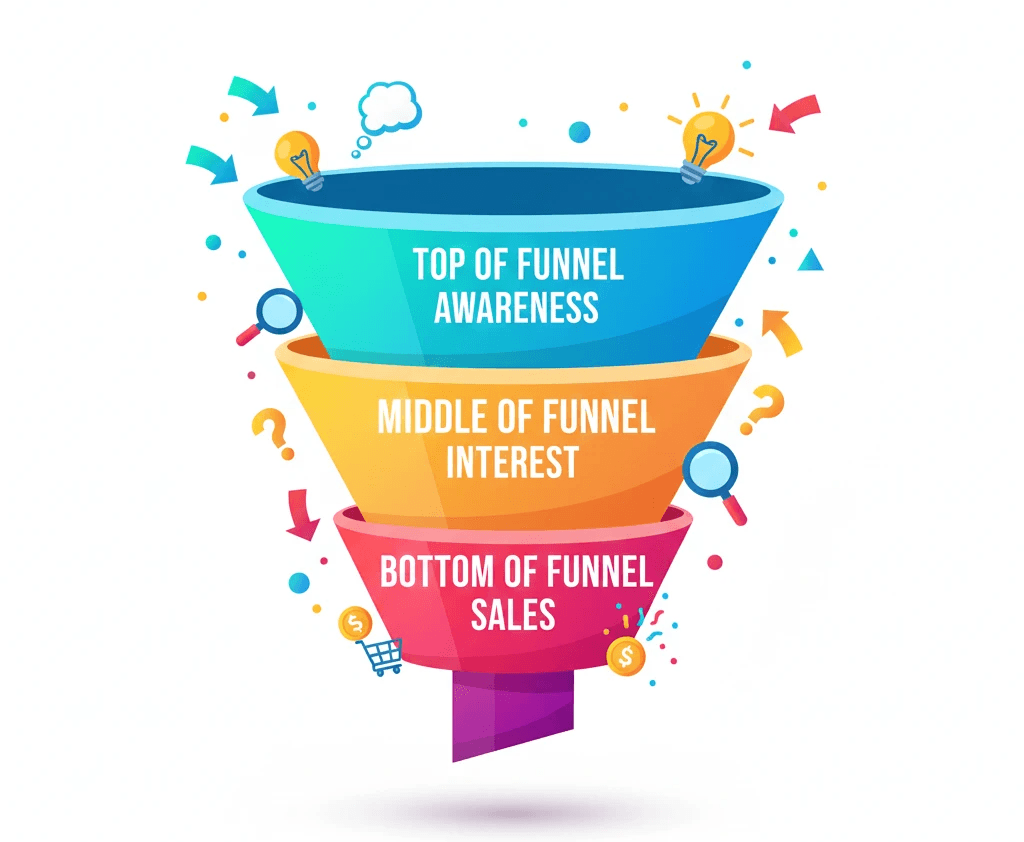
If you want consistency, you need a funnel—even a simple one.
A practical marketing funnel can look like:
Top of funnel: helpful content (blogs, guides, FAQs) that attracts search traffic
Middle of funnel: comparison pages, case studies, service detail pages that build confidence
Bottom of funnel: clear inquiry path, pricing cues, and reassurance
This is where content strategy for small business becomes a growth engine, not a “when we have time” task.
Content that tends to pull weight:
“cost” and “timeline” explainers
“best option for ___” comparisons
“mistakes to avoid” posts (people love these)
local intent pages (service + city)
proof-based posts (before/after, mini case studies)
If you’re posting content but not seeing results, it’s often because the content isn’t connected to a funnel. Helpful doesn’t automatically mean profitable—unless it leads somewhere.
Step 4: Measure what matters (and stop guessing)
If you don’t track, you’ll keep redesigning based on vibes.
At minimum, you need:
analytics installed and working
conversion tracking (form submissions, button clicks, calls)
a way to identify what pages bring qualified visitors
a monthly review rhythm
Then you improve one piece at a time:
one page
one headline
one CTA
one offer
Small, consistent iteration beats random overhauls.
A simple website optimization checklist you can use this week
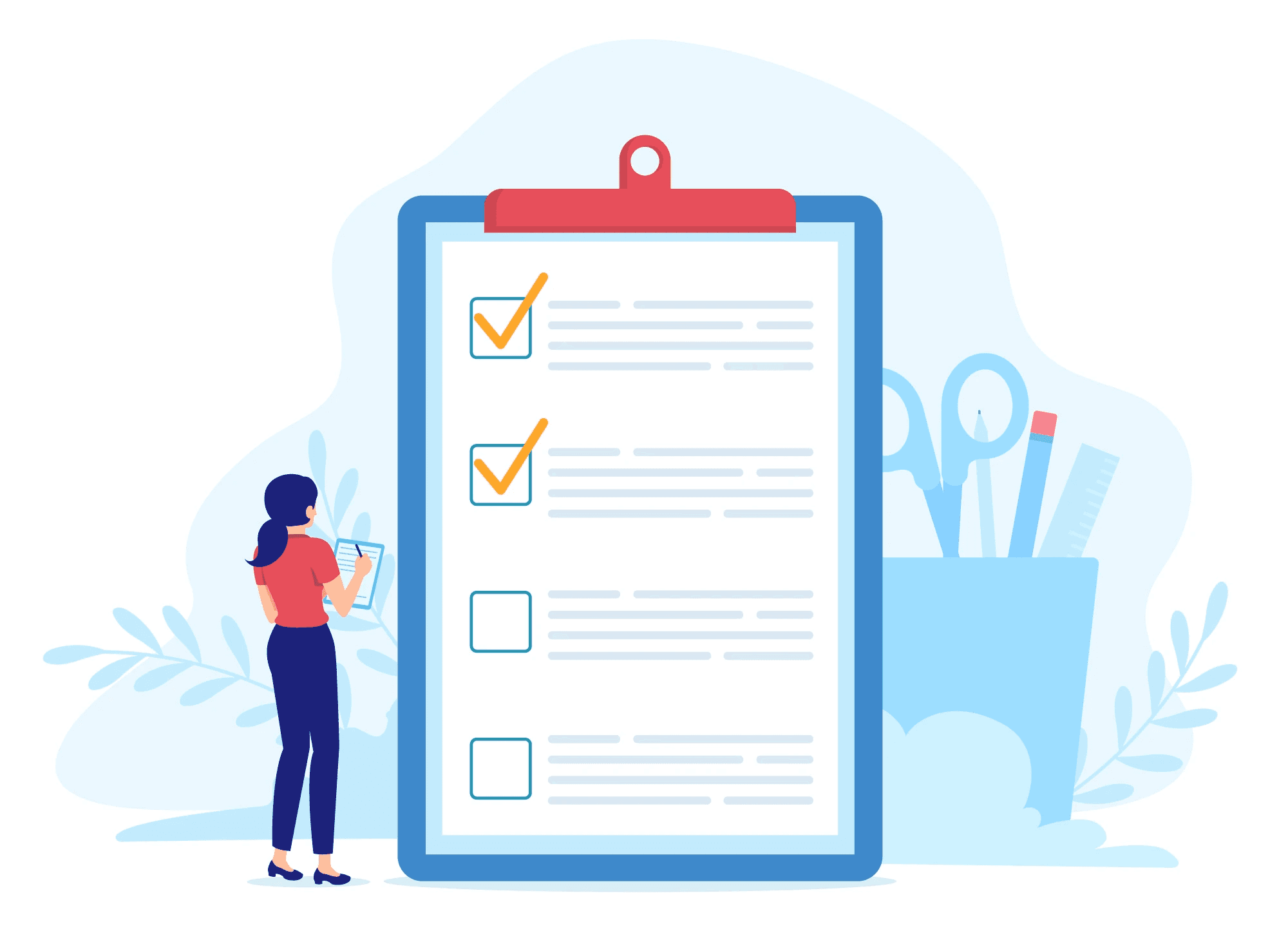
Here’s a quick website optimization checklist to turn insights into action:
Confirm your site is indexed and discoverable (Search Console)
Identify 3–5 keywords per core service page (based on intent)
Tighten the homepage value proposition (clear audience + outcome)
Add 3 trust elements (testimonials, logos, mini case study, process)
Ensure each page has one primary CTA
Improve internal links (services → case studies → inquiry)
Publish one high-intent blog post (cost, timeline, comparison, mistakes)
Optimize your Google Business Profile and link to the best landing page
Check mobile experience (speed, layout, tap targets)
Review performance monthly and iterate
This becomes your SEO strategy after website launch—and the foundation of a real website growth plan.
Where a partner fits (when you’re done duct-taping it alone)
If you’re at the stage where you want structure (strategy, SEO, content, conversion) without the noise, it can help to work with a team that treats your website as part of a system—not a standalone deliverable. For brands exploring support, Brand IT Solutions PH is positioned to help bridge the gap between “we launched” and “we’re growing,” especially around strategy-led improvements rather than surface-level changes.
No pressure. Just options—because momentum should feel built, not begged for.
Conclusion
Here’s the takeaway: getting a website isn’t nearly enough because the website is only the stage. You still need an audience (traffic), a reason to stay (trust), and a clear next step (conversion). If you’re experiencing website without traffic, website without conversions, or you’re asking “I have a website, now what?”—you’re not failing. You’re simply missing the system that turns a site into a growth tool.
Start with discoverability, sharpen your message, add proof, and improve the path to inquiry. Then iterate with data, not guesses. If you want more practical guides like this—SEO, content planning, and conversion improvements—explore our resources and keep building the kind of online presence that earns results.
Want to learn more about the Sales Funnel to increase sales through targeted marketing?
Small Business Marketing Tips: Top of Funnel
Small Business Marketing Tips: Middle of Funnel