
Marketing Rule of 7: The Power of Attention

Quick Summary: The “Marketing Rule of 7” reminds us that most customers need repeated exposure before they trust a business enough to buy, book, or reach out. This blog explains how to create consistent touchpoints across a few key channels—then funnel that attention to a website that converts—so your marketing stops feeling random and starts compounding.
If you’ve ever felt like your marketing “isn’t working,” there’s a good chance it’s not the quality of your offer—it’s the lack of repeated attention. Most customers don’t discover a business, trust it, and buy from it in one shot. They notice you, forget you, see you again, get curious, compare options, and only then decide you’re worth their time (and money).
That’s where the Marketing Rule of 7 comes in: a classic principle that says a potential customer typically needs to encounter your brand message multiple times—often framed as “seven”—before they take action. University of Maryland
For small businesses, this is both good news and a reality check. The good news: your first impression doesn’t have to “close the deal.” The reality check: your success depends on consistent visibility across real-world and online touchpoints. Once you build that momentum, the next step becomes obvious—send that attention to a website that converts.
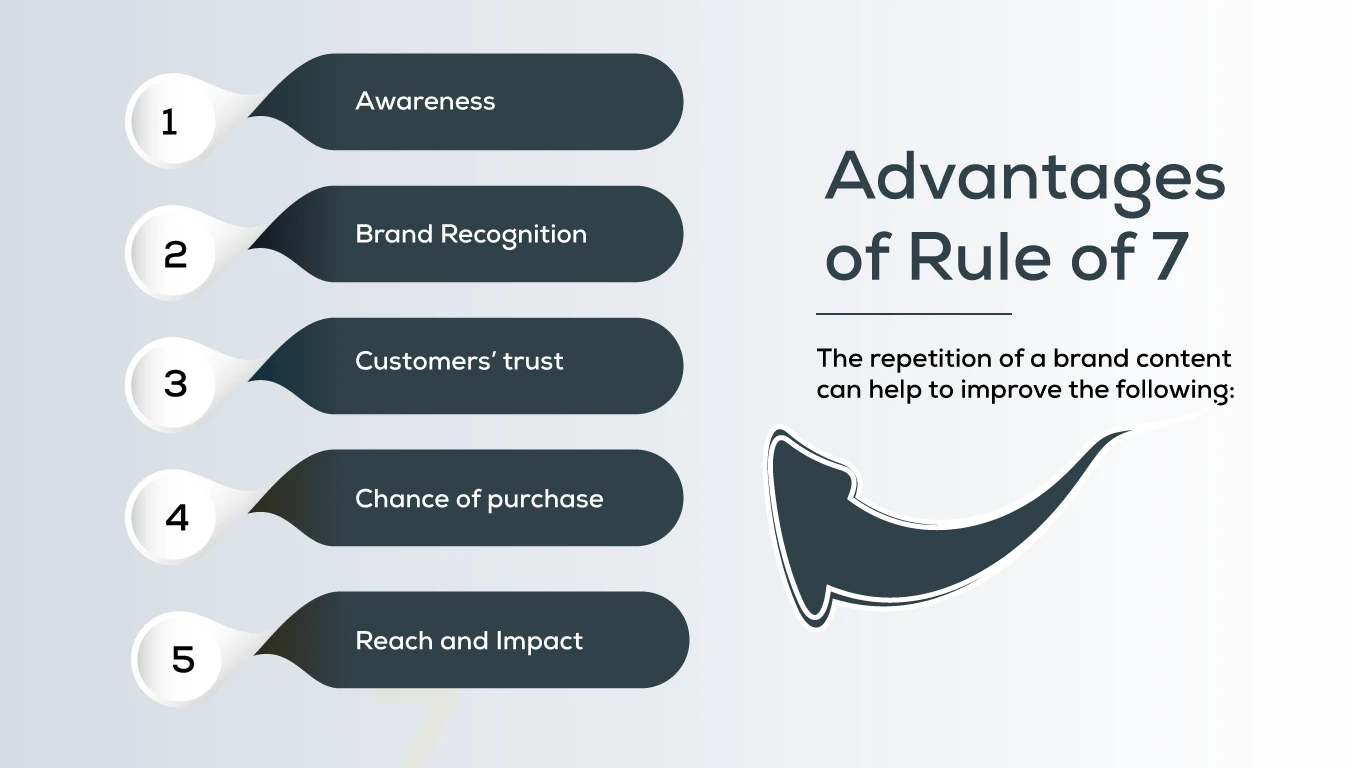
What Is the Marketing Rule of 7 (and Why It Still Matters)

Source: justshuttersbusiness
The Marketing Rule of 7 is the idea that people usually need repeated exposure to a brand before they’re ready to respond—whether that’s calling, booking, buying, or visiting your store. University of Maryland
Don’t get stuck on the exact number. The deeper point is more important:
Attention happens in layers, not in a single moment.
Familiarity lowers friction. The more “known” you feel, the easier it is for someone to choose you.
The buying journey is rarely linear. People bounce between channels and reminders.
Marketing research often discusses this as effective frequency: the idea that multiple exposures are typically needed before advertising meaningfully influences purchase intent. Springer
Why “7 Touchpoints” Isn’t a Myth—It’s a Memory Problem
Customers aren’t ignoring you to be rude. They’re busy.
They’re juggling work, family, notifications, errands, and about a thousand other decisions. Repetition works because it supports how humans process and retain information—especially when the message is consistent.
That’s why modern marketers track reach and frequency: not just “how many people saw it,” but “how often they saw it.” Nielsen
And it explains a common small-business frustration:
You run one ad, post once, or attend one event… and nothing happens.
Not because it was bad—because it wasn’t repeated.
The Real Power Behind the Rule: Consistency
source: munro
If the Marketing Rule of 7 had one fuel source, it would be consistency.
Consistency means:
Showing up on a predictable schedule
Using the same core message (not reinventing your pitch weekly)
Keeping your visuals recognizable (logo, colors, tone)
Repeating your offer in multiple formats (social posts, emails, in-person conversations)
In practical terms: consistency is what turns random marketing into a system.
What Counts as a “Touchpoint” Today?
A touchpoint is any moment a customer notices your business.
Some are online, some are offline, and the best marketing mixes both:
Online touchpoints:
Google Business Profile views
Instagram/TikTok/Facebook posts
Local SEO pages showing in search
Email newsletters
Retargeting ads
Reviews on third-party sites
Offline touchpoints:
Networking events
Pop-ups / markets
Yard signs, flyers, business cards
Partnerships and referrals
Local sponsorships
Word-of-mouth
The win is not doing everything. The win is choosing a few channels and repeating them well.
Practical Rule of 7 Examples for Small Businesses
source: romainberg
Below are realistic ways small businesses can build seven meaningful touches—without feeling spammy. Each example shows a mix of in-person + online exposure, because that’s how people actually decide.
Small Business Example: Texas Service Business (HVAC / Roofing / Plumbing)
Imagine a Texas-based home service company trying to reach homeowners.
Here’s a simple 7-touch path:
Homeowner sees your yard sign in the neighborhood
Later, they see your Google review rating while searching
A local Facebook group mentions your business name
They get retargeted with a short “before/after” video ad
They see a seasonal maintenance tip on Instagram
They click to your website and read your pricing/FAQ page
They see a “Book Today” offer and finally schedule
This works because the message is steady: reliable, local, and specific.
Small Business Example: Milwaukee Retail or Food (Boutique / Café / Brewery)
Milwaukee customers often discover businesses through community and neighborhoods.
A 7-touch path could look like:
A friend tags your location in a story
They see your event listing (trivia night / seasonal drop)
They spot your booth at a local market
They follow your account and see 2–3 posts over the next week
They get an email with a limited-time menu/item
They check your website for hours, parking, and details
They finally visit—because now it feels familiar
Notice: you didn’t “sell” hard. You simply stayed visible.
Small Business Example: Chicago Professional Services (Law Firm / Accounting / Dental)
In Chicago, trust matters—especially when the decision feels high-stakes.
A 7-touch path might be:
Prospect sees your short educational Reel: “3 mistakes to avoid…”
They see you quoted in a local publication or association post
They download a checklist from your website
They receive 2 helpful emails (not pushy—just useful)
They see a testimonial snippet in a retargeting ad
They search your firm name and read reviews
They book a consultation from a dedicated landing page
Here’s the key: as awareness increases, people are more likely to search for the brand directly (branded search), which is a strong signal of growing consideration. Google Research
Small Business Example: Minneapolis Wellness or Fitness (Studio / Coach / Clinic)
For wellness offers, people want confidence before committing.
A 7-touch path:
They see your tip carousel: “How to reduce back pain at home”
They watch your quick demo video
They see you tagged by a client
They read your Google Business Profile Q&A
They visit your website and read your “What to expect” page
They get a reminder email about a beginner-friendly offer
They book—because by now, it feels safe and familiar
This is what the Rule of 7 looks like in the real world: trust built through repeated clarity.
Once You’ve Built Attention, What’s Next? Funnel It to Your Website
When you’ve created enough touchpoints, customers start leaning in.
That’s the moment many small businesses miss: they keep pushing awareness, but they don’t have a strong next step.
If your offer is genuinely good and customers are lining up, your website’s job is to:
Confirm credibility (proof, reviews, photos, guarantees)
Explain the offer clearly (what it is, who it’s for, price range)
Remove friction (simple booking, fast load time, mobile-first)
Capture leads (forms, calls, scheduling, inquiry options)
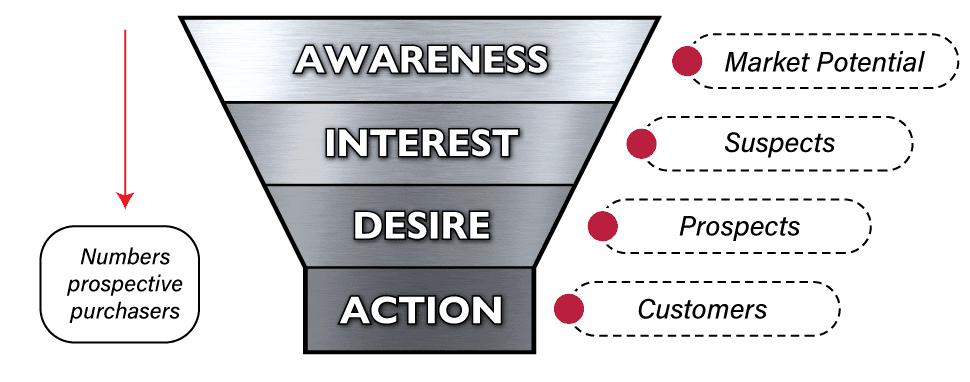
A simple “attention-to-website” funnel can be:
Awareness touchpoints (social, local, referrals)
Consideration content (FAQs, examples, outcomes)
Conversion page (clear CTA: call, book, buy)
The Consistency Checklist: How to Actually Apply the Rule of 7
If you want a practical way to implement the Marketing Rule of 7 without overwhelm, start here.
Choose 3 channels you can sustain
Pick from:
Google Business Profile + local SEO
One social platform you’ll post on consistently
Email (even twice a month is fine)
One community channel (events, partnerships, networking)
Repeat one core message
Your “core message” might be:
“Fast turnaround for busy families”
“Premium quality, no surprises”
“Specialists in [niche] for [city]”
Same message. Different formats.
Build a simple 30-day rhythm
Example:
1 short-form video per week
2 photo posts per week
1 email every two weeks
1 community touchpoint per month
Track frequency, not just likes
Instead of asking “Did this post go viral?” ask:
Are people seeing us repeatedly?
Are branded searches increasing?
Are website visits rising from local areas?
Reach and frequency are core concepts for evaluating whether your message is getting enough repetition to matter. Nielsen
Common Mistakes That Break the Rule of 7
Even strong businesses lose momentum by doing one of these:
Changing the offer too often (customers can’t remember you)
Posting in bursts (3 days of activity, then silence)
Sending attention to a weak website (no clear CTA, missing proof)
Trying to be everywhere (and burning out)
Treating “7 touches” like spam (repetition should feel helpful, not annoying)
Consistency doesn’t mean repeating the exact same post. It means repeating the same idea in a way your audience can absorb.
Conclusion
The Marketing Rule of 7 is less about a magic number and more about a marketing truth: customers need repeated exposure before they trust you enough to act. Multiple touchpoints build familiarity, and familiarity builds confidence. University of Maryland
For small businesses in Texas, Milwaukee, Chicago, and Minneapolis, the most reliable approach isn’t chasing hacks—it’s building a consistent rhythm across a few channels, then funneling that earned attention to a website designed to convert. When you show up regularly, your brand stops feeling like a stranger and starts feeling like the obvious choice.
If you’re focused on other critical areas of your business or would benefit from specialized expertise, BrandIT Solutions is available to support you with a strategic, results-driven approach. Don't hesitate to contact us!
Planning to elevate your personal branding? Read The Overlooked Strategy of a Highly Effective Person: How Visibility Shapes Your Success