Heavy is the head that wears the crown: Struggles of a Business Owner

Quick Summary: Business ownership is rewarding—but it comes with nonstop pressure, uncertainty, and responsibility that most new founders don’t expect. This blog breaks down the real challenges behind “wearing the crown,” from cash flow and pricing to leadership, decision fatigue, and the need for a strong digital presence. You’ll also get a practical weekly rhythm to build structure, reduce overwhelm, and keep your business sustainable.
There’s a moment every ambitious employee knows well: you’ve done the late nights, you’ve carried projects that weren’t “yours,” and you’ve quietly built a vision in your head that refuses to stay a daydream. You don’t just want a bigger paycheck—you want to move something forward. To create work you’re proud of. To serve real people. To make an impact on your local community in a way your job description never quite allowed.
So you finally do it. You step out of the “safe” lane and start your own business.
And that’s when the real struggles of a business owner begin—not because you weren’t talented, but because ownership changes the rules of time, pressure, and responsibility. As an employee, work is often a defined slice of the day. As a founder, the business follows you home: in your head, in your decisions, and in the lives counting on you. The crown looks inspiring from a distance—but it’s heavy up close.
The leap: from high-performing employee to accountable founder
Most businesses don’t start with greed. They start with conviction.
An ambitious employee sees gaps: customers underserved, quality compromised, communities overlooked. They imagine a better way—one built on values, craft, and contribution. They want profit, yes, but as a fuel source, not the finish line.
Then the shift happens: you’re no longer executing someone else’s plan. You’re responsible for the plan—and the outcomes.
That transition is exciting and disorienting at the same time. Suddenly, “initiative” becomes “liability.” Every decision has weight:
What you sell and how you position it
Who you hire and how you lead them
What you charge and whether it sustains you
How you show up online and whether people trust you
This is where many founders feel the whiplash. Not because they lack work ethic, but because the game is no longer about doing good work—it’s about building a machine that consistently creates value.
The real struggles of a business owner: from 8 hours to 24/7

In traditional employment, your time has edges. You clock in, you clock out, and much of the mental load belongs to someone else.
In the U.S., for example, full-time employed people averaged 8.4 hours of work on weekdays they worked (a useful reminder that the “workday” still has a recognizable boundary). Bureau of Labor Statistics
Business ownership blurs those boundaries. Even if you’re not physically working every hour, you’re mentally carrying the business far beyond office time:
Customer issues don’t follow schedules.
Payroll doesn’t care if you’re tired.
A slow week isn’t just “a slow week”—it’s rent, inventory, and salaries.
One pricing mistake can erase a month of effort.
And unlike employment, where responsibility is distributed, ownership concentrates accountability. When something breaks, it breaks in your direction.
This is also where the emotional cost shows up: decision fatigue, sleep disruption, and the quiet loneliness of being the person who has to choose—even when no option feels perfect.
Uncertainty is the tax you pay for freedom
Entrepreneurship offers freedom, but it comes with uncertainty as the entry fee.
One of the most sobering realities: not every start-up survives long enough to become “stable.” Business Employment Dynamics data from the U.S. Bureau of Labor Statistics shows 5-year survival rates of start-ups hovering around the low-to-mid 50% range in the cohorts highlighted. Bureau of Labor Statistics
That doesn’t mean “don’t start.” It means: respect what you’re stepping into.
A founder who treats uncertainty like a permanent condition (not a temporary phase) tends to make smarter moves. Practically, that looks like:
Building a pipeline before you “need” it
Tracking cash weekly, not monthly
Designing offers that customers can clearly understand and buy
Setting up operations so the business doesn’t collapse when you’re unavailable
Uncertainty doesn’t disappear. You just get better at carrying it—with systems, clarity, and a tighter relationship with reality.
When people depend on you, failure feels personal
A business owner doesn’t just manage tasks. They manage livelihoods.
The first time you run payroll hits different. Because it’s not abstract anymore. It’s someone’s groceries, rent, and school fees—funded by the business you chose to build. And once you hire, your decisions ripple outward:
Culture affects performance.
Stability affects retention.
Leadership affects trust.
This is why “being nice” isn’t enough. Caring for employees also means building a business that can keep its promises. That requires structure:
Clear roles (no one thrives in constant chaos)
Predictable communication (weekly check-ins beat random fire drills)
Training and feedback loops (so people grow with the company)
Boundaries (burnout leadership eventually becomes burnout culture)
Your team is the backbone of your business—but they can’t carry what you refuse to organize.
Value, pricing, and margins: the quiet battle that keeps you afloat
A lot of businesses don’t fail from lack of passion. They fail from weak math.
You can have great demand and still struggle if margins are thin, pricing is emotional, or expenses creep silently. This is where founders need to upgrade from “hard worker” to “financial operator.”
The U.S. Small Business Administration emphasizes basics that many founders skip early—like maintaining proper bookkeeping and using core financial statements to understand what’s happening in the business. It even calls the balance sheet “the foundation” for managing finances and notes its role in tracking capital and supporting cash flow projection. Small Business Administration
Here’s a practical lens: your offer must create value for customers and breathing room for your business. That means regularly pressure-testing:
What customers actually buy (outcomes, not features)
What it costs you to deliver (labor, time, tools, overhead)
What your pricing protects (quality, payroll, reinvestment)
And cash reserves matter more than founders like to admit. Research from the JPMorgan Chase Institute, using data from hundreds of thousands of small businesses, found that half of small businesses held a cash buffer of about 27 days of typical outflows—less than a month of cushion if inflows stop. JPMorgan Chase
That number isn’t meant to scare you. It’s meant to focus you: resilience is built, not wished for.
Digital presence isn’t optional—it’s part of your operational risk
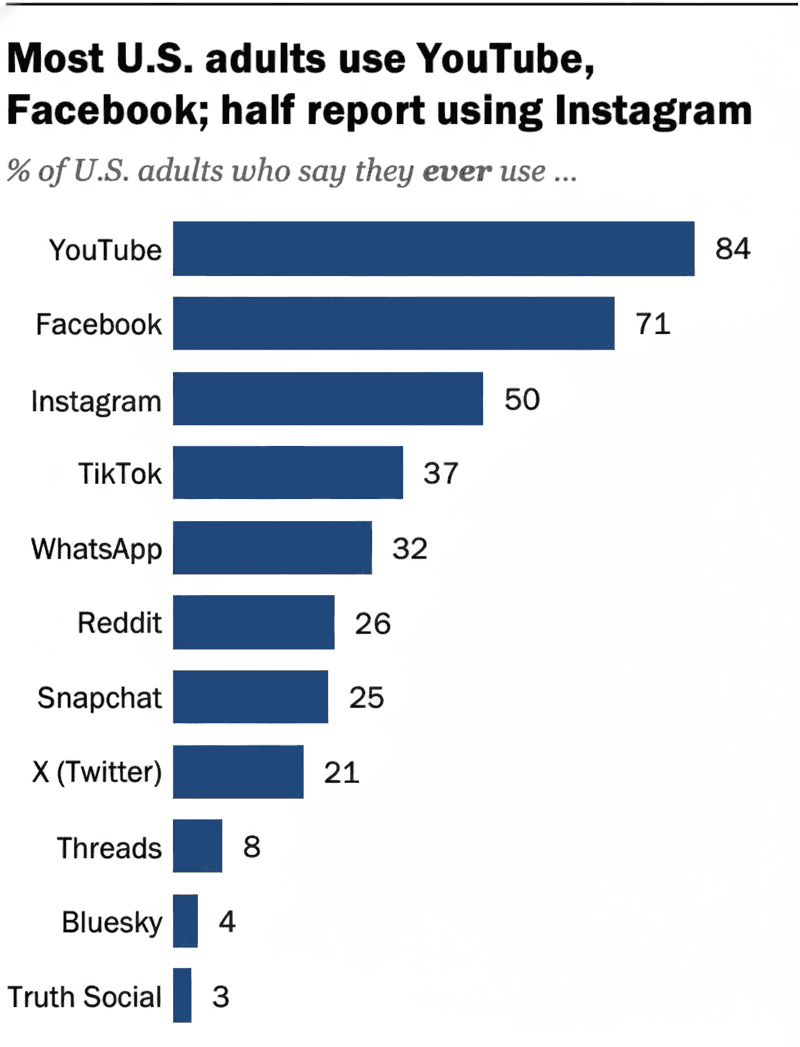
Source: Pew Research
In the modern market, your online presence isn’t “marketing.” It’s credibility, discoverability, and momentum.
You can be excellent and still invisible.
And the platform reality is clear: most adults use major online platforms, and many use them daily. Pew Research Center reports that in 2025, 84% of U.S. adults say they use YouTube, 71% use Facebook, and half use Instagram—with about half saying they visit Facebook and YouTube at least once a day. Pew Research Center
Translation for founders: people are already spending attention online. The question is whether they can find you, understand you, and trust you when they do.
A strong digital foundation usually includes:
A website that clearly explains who you help, what you solve, and what to do next
Proof (testimonials, case studies, photos, reviews, community involvement)
A simple content rhythm on 1–2 channels where your customers actually spend time
Consistent brand signals (same offer language, same promise, same tone)
This isn’t about going viral. It’s about being legible. When a stranger discovers you, your online presence should do what a great storefront does: tell your story, show your value, and invite a next step.
A practical weekly rhythm that keeps the crown from crushing you
You can’t “hustle” your way into sustainability. You need a cadence.
Here’s a founder-friendly weekly structure that balances customers, people, cash, and visibility:
One day for financial reality
Review cash position, payables/receivables, and margins
Check pricing vs. delivery cost on your top 1–3 services/products
Set one financial priority (reduce waste, increase AOV, improve collections)
One day for customer value
Talk to customers (even 3 conversations changes everything)
Review objections, FAQs, and why people buy
Improve one part of your offer (clarity, packaging, turnaround time)
One day for team and operations
Remove friction points employees deal with repeatedly
Document one process (onboarding, invoicing, handling requests)
Recognize performance and reinforce standards
One day for visibility
Publish one helpful piece of content (a lesson, a checklist, a behind-the-scenes)
Update your website or Google listing basics
Follow up with past leads or partners
One day for strategy
Track trends in your market (customer behavior, competitor shifts, seasonal demand)
Decide what to stop doing (focus is a growth strategy)
Protect time for learning and recovery
This rhythm doesn’t remove the load—but it distributes it. And distribution is how founders stay in the game long enough to win.
Conclusion
The truth is simple: it is arduous to be a business owner. Heavy is the head that wears the crown. The work expands, the pressure sharpens, and the stakes rise—because it’s no longer just your performance on the line. It’s customers trusting you, employees depending on you, and a vision asking you to become the kind of leader who can carry it.
But there’s a deeper reward that doesn’t show up on spreadsheets. Building something that improves people’s lives—serving customers well, creating jobs, and contributing to your community—creates a kind of fulfillment employment rarely replicates. If you’re in the thick of it, remember: structure creates stability. Clarity creates confidence. And impact, built with discipline, is always worth the effort.
Want to learn more about Marketing and Targeting your audiences and customers?
Marketing Rule of 7: The Power of Attention
Small Business Marketing Tips: Top of Funnel